
On Deck with Anchor Audio
Share:


Oct 27, 2026
When evaluating school emergency PA systems, it's important to look beyond volume alone. Schools need communication equipment that can be deployed quickly, deliver intelligible announcements, operate without a nearby power outlet, and move wherever staff need to communicate.
A portable public address (PA) system can help schools communicate during evacuations, outdoor emergencies, reunification procedures, and other situations where a fixed intercom may not reach everyone. It can also support everyday campus activities, including assemblies, athletic events, graduations, and outdoor announcements.
But with different system sizes, microphone options, battery capabilities, and coverage needs to consider, how do you determine which portable PA system is right for your school?
The best place to start is with your campus communication requirements. Here are six features to evaluate when comparing portable PA systems for school safety and emergency preparedness.
1. Battery Life and Power Reliability
During an emergency, access to electrical outlets cannot always be guaranteed. A power interruption, outdoor evacuation, or temporary gathering location may require staff to communicate without access to a conventional power source.
A battery-powered PA system provides greater flexibility by allowing staff to make announcements without relying on a wall outlet.
When comparing battery-powered PA systems for schools, consider:
- Battery runtime: Does the system provide enough operating time for your typical events and anticipated communication needs?
- Recharge time: How quickly can the battery be recharged between uses?
- Battery maintenance: What charging routine will keep the equipment ready?
- Power availability: Can the system operate in locations where electrical outlets are unavailable?
Remember that advertised battery life can vary depending on volume, audio content, battery condition, and operating conditions. Evaluate runtime against how your school expects to use the equipment.
Just as important, establish a routine for charging, testing, and storing portable PA systems so they're ready when needed.
2. Speech Clarity in Different Environments
An announcement only helps if people can understand it.
School campuses present a range of acoustic challenges. A message that sounds clear in a quiet classroom may be difficult to understand in a crowded gymnasium, a cafeteria filled with conversation, or an outdoor athletic field with wind and background noise.
When evaluating a portable PA system, consider more than its maximum sound output. Look at how well it supports clear speech in the environments where your staff will use it.
Ask these questions:
- Can staff deliver understandable announcements over typical background noise?
- Can the speaker be positioned to direct sound toward the intended audience?
- Is the system appropriate for both indoor and outdoor applications?
- Does the microphone capture speech clearly without requiring complicated adjustments?
A practical tip: Test a system in the actual space where you plan to use it. Have someone speak through the microphone while another person listens from different areas of the audience. Check whether the message remains understandable at the edges of the coverage area.
For larger spaces, speaker placement and audience distribution can be just as important as the equipment itself.
3. Coverage That Matches Your Campus
Not every school needs the same level of sound coverage.
A portable PA system used for a small group of students has different requirements from one used at a football stadium, a large outdoor assembly, or an evacuation gathering area serving several hundred people.
Before comparing models, map out the locations where portable communication may be needed.
|
Campus location |
What to evaluate |
|
Classrooms and small gathering areas |
Compact size, easy setup, and clear speech at short distances |
|
Gymnasiums and cafeterias |
Speech clarity in reflective, noisy spaces |
|
Courtyards and playgrounds |
Portability and sound coverage across open areas |
|
Athletic fields and stadiums |
Higher output, speaker positioning, and audience distance |
|
Evacuation and reunification areas |
Rapid deployment, battery operation, and coverage of temporary gathering locations |
Use these scenarios as a starting point, not a guarantee of coverage. Actual performance depends on the environment, background noise, speaker placement, audience size, and the specific system selected.
For a school with several buildings and outdoor spaces, it may make sense to evaluate more than one system size or plan for multiple portable PA systems to support different areas.
4. Portability and Speed of Deployment
In a time-sensitive situation, equipment needs to be easy to retrieve, move, and operate.
A system that provides ample sound output but is difficult for staff to transport may not be the most practical choice for every application. Consider who will operate the equipment and how far it may need to travel.
Evaluate the following:
- Weight: Can the intended users move the system safely?
- Transport features: Would wheels, handles, or a compact design make relocation easier?
- Setup: Can staff prepare the system without extensive technical assistance?
- Storage: Is it practical to keep the equipment accessible and charged?
- Ease of operation: Can authorized staff quickly learn the basic controls?
For schools, portability matters beyond emergency response. The same system might move from an assembly to an athletic field, then be used for a graduation ceremony or outdoor school event.
Choosing equipment that fits those everyday workflows can make it easier to keep the system familiar and ready for use.
5. Microphone Options and Ease of Use
The right microphone configuration depends on how staff communicate.
A wired microphone can be a straightforward option for stationary announcements. Wireless microphones offer additional freedom of movement for staff who need to walk through a gathering area, address students from different positions, or coordinate an event while speaking.
When comparing school PA systems, consider:
- Whether the system includes a microphone or requires a separate purchase
- Whether a wired or wireless microphone better fits the intended application
- How many people may need to speak through the system
- Whether multiple microphones are needed for assemblies, performances, or event coordination
- How easily staff can learn to operate the microphone and adjust audio levels
For example, a principal making an announcement from a fixed location may have different needs from an athletic director coordinating activities across a field.
Schools considering wireless options should also verify microphone compatibility, supported microphone capacity, and the configuration included with the specific model. Wireless features vary between systems and packages.
6. Versatility for Everyday School Activities
Emergency preparedness is an important consideration, but portable PA systems can also support a wide range of daily campus needs.
Using a system for regular school activities gives staff opportunities to become familiar with the controls, microphone, and setup process before they need it in a time-sensitive situation.
Consider whether the system could support:
- Morning announcements and student gatherings
- School assemblies and pep rallies
- Athletic practices and sporting events
- Graduation ceremonies and outdoor performances
- Arrival, dismissal, and parking lot communication
- Field trips and outdoor learning activities
- Emergency drills and designated evacuation areas
A versatile portable PA system may serve multiple departments, helping schools make better use of their equipment budget.
The goal is to find a system that meets your campus communication requirements without paying for capabilities you don't need or choosing a system that falls short in your most demanding environment.
Comparing Portable PA Systems for School Applications
Once you've identified your campus requirements, the next step is to compare systems that fit your intended applications. Anchor Audio offers several battery-powered portable PA systems designed for different audience sizes, environments, and mobility needs.

Mini: Compact, Portable CommuMini: Compact, Portable Communicationnication
A lightweight option for smaller groups, localized announcements, and staff who need an easy-to-transport PA system. The Mini weighs approximately 2.5 pounds, making it practical for applications where mobility is a priority.
Consider it for: small gatherings, localized announcements, and mobile staff communication.
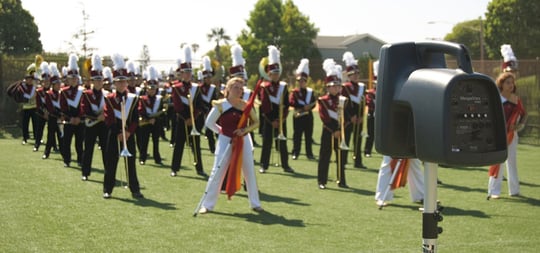
MegaVox 2: Mobile Campus Communication
Designed for portable voice projection, the MegaVox 2 offers battery-powered operation, Bluetooth audio, and support for up to four wireless microphones. It's worth considering when staff need to communicate in changing locations throughout the school day.
Consider it for: athletic practices, outdoor activities, field trips, and mobile announcements.
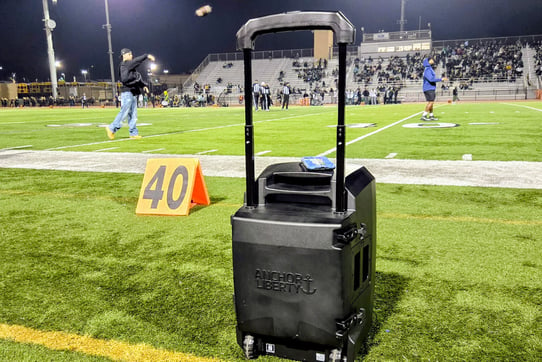
Liberty 3: Assemblies and Campus Events
The Liberty 3 is a portable PA option for schools that need to move between indoor gatherings and outdoor activities. Its wheeled design and battery-powered operation help simplify transport and setup.
Consider it for: assemblies, pep rallies, outdoor gatherings, and graduation ceremonies.
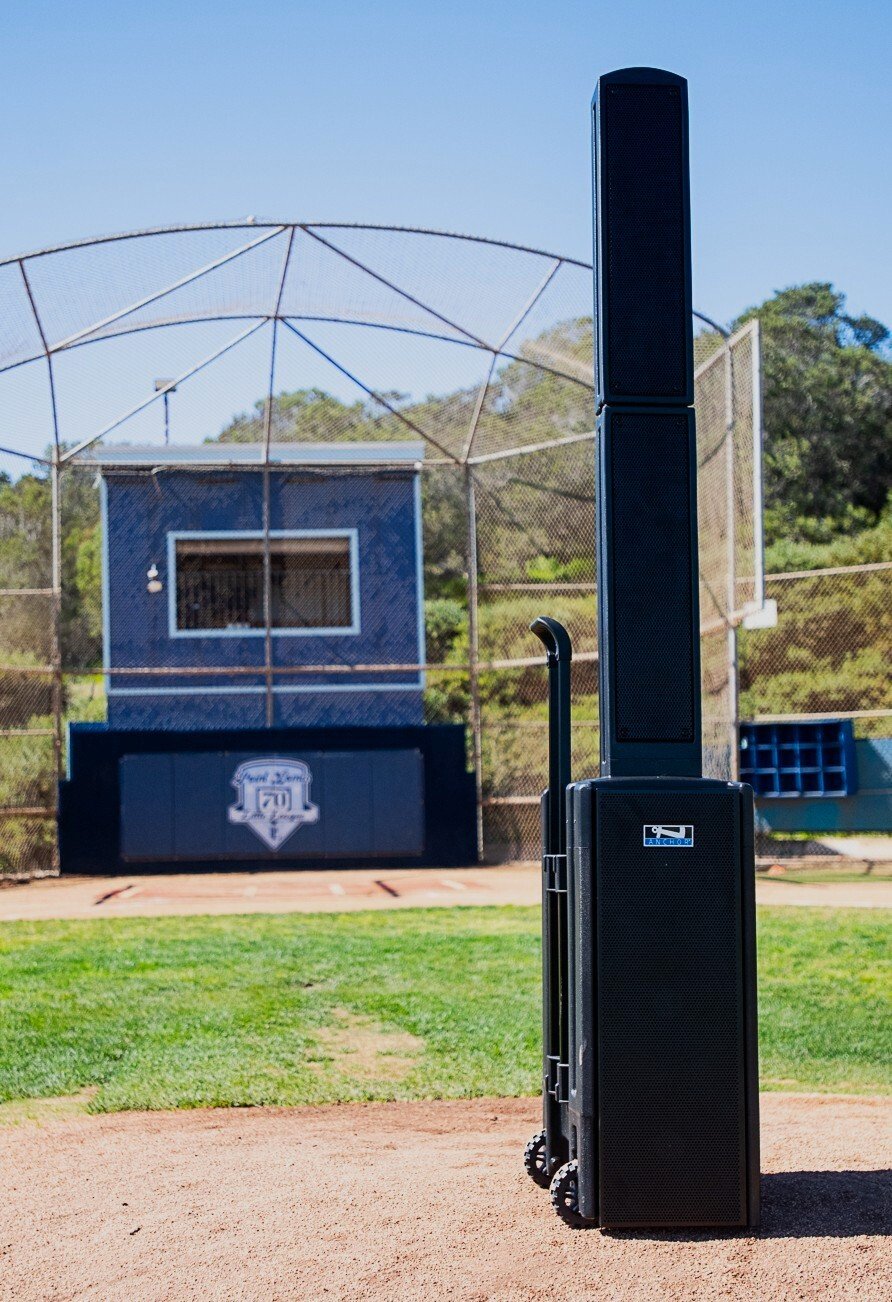
Beacon 3: Flexible Coverage for Larger Gatherings
The Beacon 3 is designed for applications that call for a portable line-array speaker system. Its format makes it a candidate for schools evaluating sound coverage for larger gatherings and varied campus activities.
Consider it for: school performances, larger assemblies, and indoor or outdoor events.
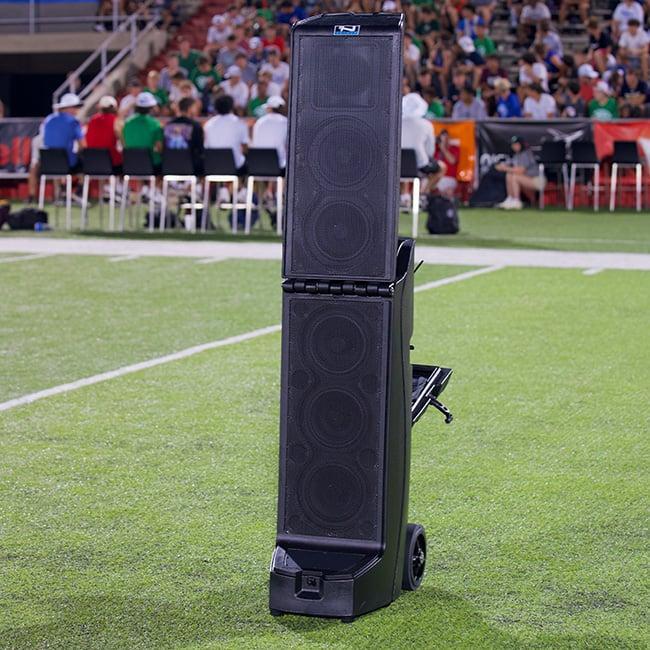
Bigfoot 3: Large Outdoor Spaces
For schools with stadiums, athletic complexes, and expansive outdoor gathering areas, the Bigfoot 3 offers high-output portable sound. Its suitability will depend on the size and layout of the space and the coverage required.
Consider it for: football fields, large outdoor assemblies, and stadium events.
Explore the Anchor Audio Education solutions to learn more about portable audio options for schools.
Questions to Ask Before Purchasing a School Emergency PA System
Before selecting a system, bring together the people who will use and maintain it. Administrators, facilities teams, athletic directors, and emergency preparedness coordinators may have different requirements.
Use these questions to guide your evaluation:
- Where on campus do we need portable communication beyond our installed PA system?
- How large are the typical audiences, and how far away will listeners be?
- Will we use the equipment indoors, outdoors, or both?
- How long must the system operate between charges?
- Who will be responsible for retrieving, operating, testing, and charging it?
- Do we need wired microphones, wireless microphones, or both?
- Will one system meet our needs, or do we need multiple systems for different locations?
- How will portable PA equipment fit into our existing emergency communication procedures?
Answering these questions first can help narrow the options and make purchasing decisions more straightforward.
Frequently Asked Questions
What should schools look for in an emergency PA system?
Schools should evaluate battery-powered operation, speech clarity, appropriate sound coverage, portability, ease of deployment, microphone options, and maintenance requirements. The right system depends on campus size, intended use, and the environments where staff need to communicate.
Why use a portable PA system instead of relying only on a school intercom?
A permanently installed intercom can be effective in the areas it serves, but its coverage may not extend to every outdoor field, parking lot, temporary gathering point, or evacuation location. A portable PA system can provide additional flexibility in those situations. It should complement (not replace) required emergency alerting and communication systems.
How do schools determine how much PA coverage they need?
Start by identifying the intended audience size, the distance between the speaker and listeners, background noise, and the environment. Test equipment in representative locations whenever possible. Large or acoustically challenging spaces may require higher-output systems, multiple speakers, or a different placement strategy.
Are battery-powered PA systems useful outside emergencies?
Yes. Portable PA systems can support assemblies, athletic events, graduations, outdoor learning, and everyday announcements. Regular use also helps authorized staff become familiar with the equipment before an emergency occurs.
How often should a school test its portable PA equipment?
Schools should establish a documented testing and maintenance schedule consistent with manufacturer guidance and their own emergency preparedness procedures. Checks should include battery charge, microphone operation, audio clarity, physical condition, and readiness for the locations where the system may be used.
Build a More Flexible Campus Communication Plan
Effective school communication requires more than choosing a speaker with enough volume. It means understanding where messages need to reach people, selecting equipment that fits those environments, and ensuring staff can use it confidently.
By evaluating battery life, speech clarity, coverage, portability, microphone options, and everyday versatility, schools can make more informed decisions about portable PA systems that support both routine campus activities and emergency preparedness.
Anchor Audio offers portable PA solutions for a range of school applications, from compact communication needs to large outdoor gatherings.
Ready to evaluate portable PA systems for your school? Explore Anchor Audio's education solutions or connect with an authorized Anchor Audio dealer to discuss your campus communication requirements.