-2.png?width=184&height=100&name=AnchorAudio-Logo-bold-R%20(1)-2.png "Anchor Audio Logo")
On Deck with Anchor Audio
Share:




Portable PA Systems for Sports: What Facility Managers Should Look For
Sep 24, 2026
Sports and recreation facilities rarely have just one audio need.
A system might be used for a weekend tournament, a weekday practice, a youth camp, a community event, a fitness class or an announcement across an outdoor field. In many facilities, the ideal audio system needs to work in different spaces without requiring a complicated setup or dedicated AV staff.
That makes portability an important consideration.
But portability alone isn't enough. When choosing a portable PA system for sports and recreation, facility managers should consider coverage, speech intelligibility, battery life, durability, microphone options, setup time and how easily the system can adapt to different events.
Here are the key factors to consider.
1. Start With Where the System Will Be Used
Before comparing speakers, consider the spaces where the PA system will actually be used.
A recreation department or athletic facility may need audio for:
- Athletic fields
- Gymnasiums
- Basketball and volleyball courts
- Parks and outdoor gathering areas
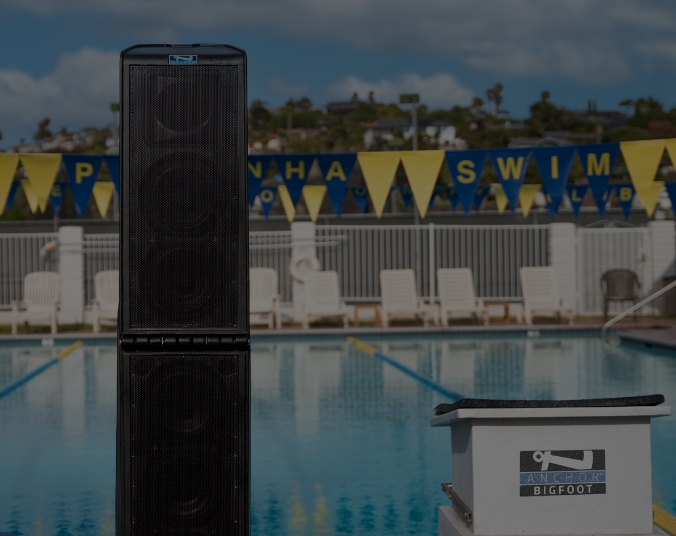
- Pool decks
- Campgrounds
- Fitness areas
- Youth programs and camps
- Tournaments and competitions
- Community events
- Awards ceremonies and presentations
Each environment creates different challenges.
An outdoor field may require audio to travel across a large open area, while a gym may require more attention to speech clarity because sound can reflect off hard surfaces.
A system that works well for one application may not be the right fit for another.
The goal is to choose a system that matches the facility's most common uses while providing enough flexibility for occasional events.
2. Consider Coverage, Not Just Volume
One of the most important considerations when selecting a sports facility PA system is how well it covers the intended listening area.
A speaker that can produce a very high volume doesn't necessarily provide clear audio throughout a large space.
Facility managers should consider:
- How large is the listening area?
- Where will the audience or participants be located?
- Are there areas where announcements need to reach consistently?
- Is there significant background noise?
- Will the system be used indoors, outdoors or both?
- Does the space change depending on the event?
For larger athletic fields or recreation spaces, multiple speakers may provide more consistent coverage than relying on a single speaker at very high volume.
This is particularly important when the primary goal is clear speech, such as coaching instructions, event announcements, safety information or emergency communication.
3. Look for Portability That Fits the Facility
A portable PA system should actually be practical to move.
Consider how the system will get from storage to the field, gym, park or event area.
Important questions include:
- How much does the system weigh?
- Does it have wheels or a convenient carrying configuration?
- Can one person set it up?
- How much equipment needs to be transported?
- Does it require speaker stands or additional cables?
- How quickly can it be ready for an event?
For facilities where equipment moves between locations regularly, these details can have a major impact on how often the system is actually used.
A system that takes significant time and effort to deploy may be less useful than a simpler portable system that staff can set up quickly.
4. Battery Power Can Make Setup Easier
Access to power isn't always convenient at a sports field, park, pool or outdoor recreation area.
A battery-powered PA system can eliminate the need to locate a nearby electrical outlet or run extension cords across an event area.
When evaluating battery-powered systems, look beyond the fact that the system has a battery.
Consider:
- Expected battery runtime
- Charging time
- Battery replacement options
- Whether the battery can support a typical event
- How the system performs during extended use
For facilities that host events throughout the day, dependable battery life can be particularly important.
5. Think About Microphone Options
The right microphone depends on how the system will be used.
For example:
Handheld microphones can work well for announcers, presentations and ceremonies.
Headset microphones can be useful for coaches, instructors and fitness leaders who need to move freely while speaking.
Wireless microphones can provide additional flexibility when the speaker and person using the microphone need to move independently.
If a facility uses its PA system for multiple types of events, having flexible microphone options can make the same system useful in more situations.
6. Consider Wireless Speaker Connectivity for Larger Spaces
Larger facilities may need more than one speaker to provide consistent coverage.
Traditional setups can require signal cables between speakers, which can add setup time and create additional equipment to manage.
Wireless speaker connectivity can simplify this process.
For example, compatible Anchor Audio Series 3 systems can use AnchorFLEX to wirelessly connect multiple speakers. This can help extend coverage across larger areas while reducing the need for signal cables between speakers.
That can be particularly useful for athletic fields, large outdoor gathering areas and other spaces where placing multiple speakers throughout the listening area makes sense.
The goal isn't necessarily to make the system louder. It's to put audio where people need to hear it.
7. Durability Matters in Recreation Environments
Sports and recreation equipment can see a lot of use.
Systems may be transported between facilities, stored in equipment rooms, used outdoors and handled by different staff members throughout the year.
When evaluating a system, consider whether it is designed for the environments where it will be used.
Depending on the facility, this could include:
- Weather-resistant construction
- Durable components
- Protective grilles
- Reliable controls
- Long-term battery availability
- A warranty that supports continued use
For outdoor applications especially, durability should be part of the purchasing decision rather than an afterthought.
8. Choose a System That Can Adapt to Different Events
A recreation facility may have a very different audio requirement from one day to the next.
One weekend might involve a soccer tournament. The next could be a community gathering. A few days later, the same equipment could be used for a camp activity or fitness class.
That makes versatility valuable.
Rather than purchasing separate equipment for every application, consider whether one portable PA system can support multiple uses.
A flexible system can potentially be used for:
- Coaching and training
- Game-day announcements
- Tournaments
- Fitness classes
- Camps and youth programs
- Awards ceremonies
- Community events
- Presentations
- Outdoor gatherings
- Facility announcements
The more applications a system can support, the more useful it can become as a shared facility resource.
9. Keep Setup Simple
Sports and recreation facilities don't always have dedicated AV personnel.
The people using the system may be coaches, athletic staff, recreation coordinators, instructors, volunteers or event staff.
That means ease of use matters.
Look for systems that make common tasks straightforward, such as:
- Connecting a microphone
- Adjusting volume
- Connecting Bluetooth devices when appropriate
- Moving the system
- Adding speakers when additional coverage is needed
- Charging the system
- Storing the equipment between events
A system doesn't need to have the most features to be useful. It needs to have the right features that staff can easily use.
10. Consider How the System Fits Into Your Long-Term Facility Plans
A PA system is often part of a larger facility upgrade rather than an isolated purchase.
When evaluating options, consider whether the system can continue to meet your needs as the facility's programming changes.
For example:
- Could the system support additional speakers in the future?
- Can it be used in multiple areas of the facility?
- Can different staff members use it without extensive training?
- Will it work for both everyday activities and larger events?
- Can the same equipment support indoor and outdoor applications?
Thinking about these questions can help prevent a system from becoming obsolete simply because the facility's needs change.
A Simple Checklist for Choosing a Portable PA System
When comparing portable PA systems for sports and recreation, start with these questions:
Coverage
- How large is the area?
- Where do people need to hear?
- Are multiple speakers needed?
Portability
- Can staff easily transport it?
- Can one person set it up?
Power
- How long does the battery need to last?
- Is electrical power readily available?
Microphones
- Will users need handheld, headset or wireless microphones?
Connectivity
- Will the system need to connect to additional speakers?
- Would wireless speaker connectivity simplify setup?
Durability
- Will it be used outdoors?
- How frequently will it be transported?
Versatility
- Can the system support multiple sports, recreation and community applications?
Ease of use
- Can staff operate it without specialized AV knowledge?
The Right Portable PA System Starts With the Facility
Choosing a portable PA system isn't simply about finding the speaker with the highest output or the most features.
The better starting point is understanding where the system will be used, who will use it and what people need to hear.
For sports and recreation facilities, a useful system should provide appropriate coverage, be easy to transport and operate, have enough battery life for typical events, and adapt to different indoor and outdoor applications.
And as we covered in the previous article, better coverage doesn't always mean turning up the volume. In larger facilities, strategically positioning multiple speakers can help deliver more consistent audio across the space.
For facilities planning upcoming improvements, evaluating these factors now can help identify the right audio solution for both current programming and future events.
FAQ
What should I look for in a portable PA system for sports?
Look at coverage, portability, battery life, microphone options, durability, ease of use and whether the system can support additional speakers when needed.
What is the best PA system for a sports field?
The appropriate system depends on the size and layout of the field, where listeners are located, background noise and whether the system needs to support additional speakers.
Are battery-powered PA systems good for outdoor sports?
Battery-powered systems can be useful for outdoor sports because they don't require access to an electrical outlet during operation. Battery runtime should be evaluated based on the length and type of events.
Can multiple portable PA speakers be used together?
Yes. Some portable PA systems can connect multiple speakers to extend coverage across larger areas. Wireless speaker connectivity can also reduce the need for signal cables between speakers.
Do recreation facilities need wireless microphones?
Not necessarily, but wireless microphones can provide additional flexibility for coaches, instructors, announcers and presenters who need to move around while speaking.
Can one portable PA system be used for multiple sports and recreation applications?
Yes. A versatile portable PA system can support applications ranging from practices and games to camps, fitness classes, tournaments, presentations and community events.